


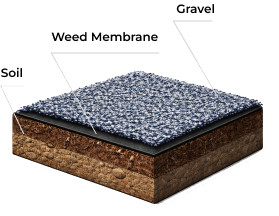
Add Weed Membrane
- Extends the life of your decorative stone
- Improves drainage and reduces muddy areas
- Saves time, effort, and long-term maintenance costs
- Stops weeds from growing through gravel
- Prevents stones from sinking or mixing with soil
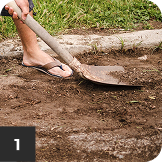
Prepare the Ground
Clear and level the area.
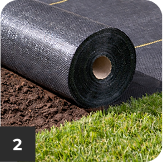
Lay the Weed Membrane
Roll out evenly across the surface.
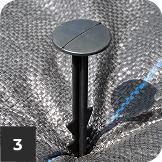
Secure in Place
Fix with ground pegs.
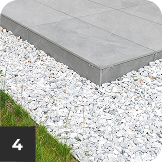
Add Your Covering
Finish with gravel or stone.
Cotswold Self Binding Gravel
£70.20


Cotswold self binding path is a limestone aggregate that ranges from 10mm down to a dust. It provides a natural effect but with a firmer finish than gravel. Similar products have different names like Gold Path Gravel or Hoggin Footpath Gravel. The self binding path gravel is normally laid on compacted hardcore or MOT type 1 that has been levelled and rolled. It is essential that the base allows for drainage. The aggregate should be laid to approximately 75mm which once compacted will result in a surface thickness of about 50mm. Timber edging should be used if you require a neat appearance to the path or area that's being covered. Ideally a vibratory roller or plate should be used to compact the gravelled surface. It would also be possible with a drum roller. The heavier the roller the better. This causes the gravel to bind together and form a firm surface once the aggregate has dried. The centre of the path should be slightly higher than the edges. This provides a camber which will allow rain to drain away rather than leaving little puddles which over time could lead to failure of the surface.On the final pass of the roller the drum should be sprayed with water. Enough water should be sprayed to stop the fine dust sticking to the drum. Water rolling is essential and ensures the gravel surface finish is smooth and well bonded. Once complete use a hose with a fine spray to lightly wet the area and leave to dry.
Maintenance
Maintenance of your self binding gravel path is important. Any garden debris on the path should be removed with a soft bristled brush to prevent damage to the surface. Weeds can grow on the self binding aggregate but should NEVER be pulled out. This would loosen the compacted gravel leaving a hole. Just spray the weed with a water based weed killer to prevent path damage. Any potholes that appear can be repaired by neatly removing a small area around the hole. Fill the hole with some fresh self binding gravel and roll the area as described in our instructions above. If you ever decide to resurface the path, then rake off the top surface of the gravel. Remove approximately 20mm of the loosened top layer which you can discard. Then apply a fresh layer of gravel to bring the path up to the previous depth. Once again use the original laying instructions described above.